Antipholus and Dromio live in the rural South and travel to the Harlem Renaissance of the 1920s in this season’s Oregon Shakespeare Festival staging of The Comedy of Errors.
Director Kent Gash explains his reasoning for the novel setting in this video:
In what has the makings of a hysterical double bill, the festival will also host a performance of the Marx Brothers’ “Cocoanuts.” I’m tempted to add, “Because sometimes you feel like a nut” except few people will catch the reference and both plays are equally nutty.
I mean that in a good way.
For more on the 2014 Oregon Shakespeare Festival, here’s the SCOOP from the Oregonian.
Deft and prolific wordplay is one of the quintessential qualities setting Shakespeare apart from other playwrights – and The Comedy of Errors proves that he had the knack from the beginning. One wonders how and where he acquired it, this love of multiple meanings and double entendres, especially those of a comedic or erotic nature. Might it have begun with the pranks of a bored schoolboy struggling to get through the tedium of endless Latin lessons?
At any rate, Shakespeare does not hesitate at the lengths he will go to keep his audience entertained. Take this passage, for instance, when Antipholus and Dromio of Ephesus wish to return home for dinner, only to be locked out by the duteous (and unknowing) Dromio of Saracuse:
ANTIPHOLUS OF EPHESUS: Go, fetch me something; I’ll break open the gate.
DROMIO OF SARACUSE (within): Break any breaking here, and I’ll break your knave’s pate.
DROMIO OF EPHESUS: A man may break a word with you, sir, and words are but wind. Ay, and break it in your face, so break it not behind.
DROMIO OF SARACUSE (within): It seems thou want’st breaking. Out upon thee, hind!
Character doublings and trebblings in The Comedy of Errors are but metaphors for the multivalent meanings that Shakespeare set against each other here and the rest of his works.
It’s fascinating to see him doing this in the Comedy, especially since it is commonly dated as his earliest play. Surely Shakespeare must have enjoyed an apprenticeship of some sort to achieve this kind of mastery from the start.
Again we see Shakespeare reveling in witty banter when he has Dromio of Saracuse describe a kitchen servant who claims him to be her own. Her circumference is said to be so great that her body can be taken for a globe, upon which can be identified distinct countries. Antipholus demands specifics, asking him in turn where Ireland, Scotland, Spain and the “Netherlands” may be found.
Such passages highlight how Shakespeare alternates between highbrow concepts and lowbrow humor, sometimes within the span of a single dialogue. One minute he can be as brazen and cheeky as an Irish limerick, the next have Antipholus of Saracuse say to Luciana:
ANTIPHOLUS OF SARACUSE: O train me not, sweet mermaid, with thy note
To drown me in thy sister’s flood of tears.
Sing, siren, for thyself, and I will dote.
Spread o’er the silver waves thy golden hairs,
And as a bed I’ll take them and there lie,
And in that glorious supposition think
He gains by death that hath such means to die.
Let love, being light, be drowned if she sink.
Has anybody besides James Joyce ever displayed such a wingspan, reveling in lowly sophomoric puns and pranks only to soar to lofty heights of linguistic expression when he went a-wooing?
UPDATE: The embedded viewer has been disabled by YouTube. The video now requires a link but will prove worth the extra click. My apologies.
While I process all the happenings this weekend at the 2014 California International Antiquarian Book Fair, I thought you might enjoy this video (recommended to me by YouTube…they’re learning!) explaining in great detail the recent quest to recover Richard III’s body from a Leicester parking lot.
A part of me, quite honestly, resists this type of slick, made-for-TV production. Yet I can’t help but be thankful that the truth, for Richard’s sake, whatever it turns out to be, gets made known to a wide, general audience. He deserves nothing less.
As a recently-published review of Shakespeare’s Richard III suggests, the time may not be far off when theatergoers demand a more nuanced treatment than the typical, over-the-top, Richard-as-evil-henchman performances we have grown accustomed to. What that would look like is anybody’s guess.
It opens up a conundrum, welcome or not, regarding the desirability of absolute fidelity to an author’s intent, even when history discovers the basis for that intent to be patently false. The text will always remain the text [text qua text]. But in light of these events, one might reasonably ask if that should always be the case.
Perhaps Richard III’s lasting legacy will be as another lesson in how a lie told often enough – and well enough – can, over time, be taken for truth. And that also, just maybe, given enough time, the actual truth will eventually out.
History could be in the midst of radical revision right in front of our very eyes.
Old Tolstoy Found Religion – But No Love for Shakespeare
While I spend the weekend hanging out at the California Antiquarian Book Fair, I thought you might enjoy a sampling of contrarian points of view to my heavy doses of Bardology.
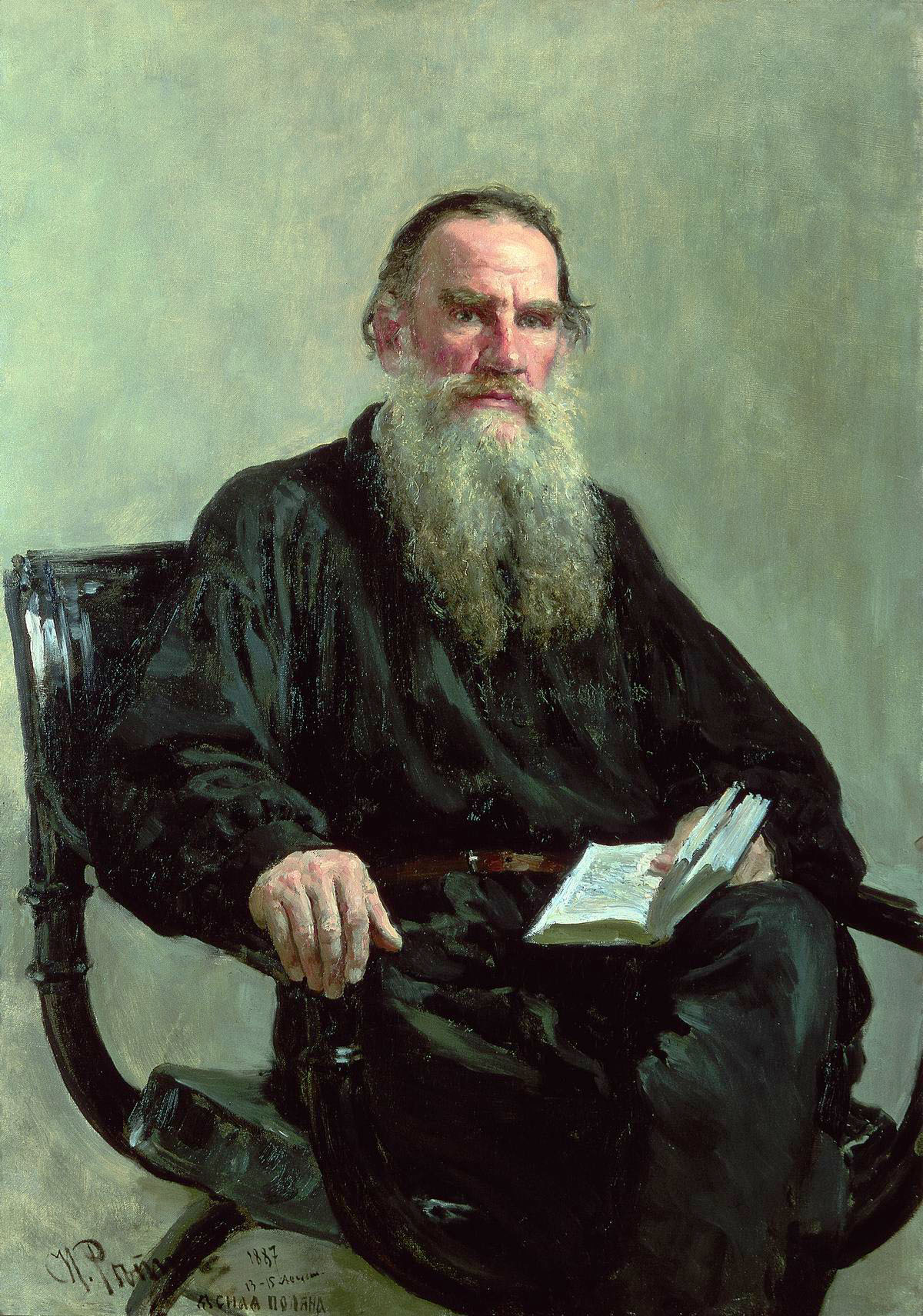
This all began when I discovered tp my amazement that no less than the eminent Leo Tolstoy detested Shakespeare with a white-hot passion. I plan to read an ebook of his essay graciously made available for free by the Guttenberg Project.
In the meantime, this sent me on a most bizarre odyssey as I googled one shocking tale after another of famous people who could not stand either Shakespeare or his work. Surely there must be some professional jealousy going on here.
If there is any truth to professor Harold Bloom’s theory in the “agon” of the ages, that great artists inherit an obligation to absorb the accomplishments of their predecessors, this must quite naturally lead to enormous anxiety when you face the daunting challenge of having to follow upon the likes of Homer, Dante, Chaucer, Shakespeare and Milton. Better to draw a mustache on the Mona Lisa than attempt to top it.
That could, in part, explain these:
Voltaire called Shakespeare’s works an “enormous dunghill.”
Tolstoy was equally unimpressed, calling Will’s writing “Crude, immoral, vulgar and senseless.”
George Bernard Shaw really waxed poetic about how much he hated Shakespeare. “There is no eminent writer, not even Sir Walter Scott, whom I despise so entirely as I despise Shakespeare,” he said. “It would be positively a relief to me to dig him up and throw stones at him.”
I wish I could post this shocking listing from Brianpickings in full. But I offer this smattering of quotes as an appetizer and an invitation to bang the LINK for more.
Maybe it’s the recent discovery of Richard’s decomposed body in a Leicester car park, but performances of Shakespeare’s Richard III seem all the rage these days.
I’d like to mention a notable review which stands out to me for bringing up the growing understanding that Richard may have been the victim of one of the greatest political hit jobs in history.
This raises a crucial and complex issue of whether historical accuracy ought to affect our performance or appreciation of the play – or any fictional work that purports to be lifted from a true story.
Granted, Shakespeare never makes that claim. And the facts in this case are far from definitive. Nevertheless, it occurs to me that we watch fictional cotton candy like Shakespeare in Love or Amadeus and don’t complain. Should it be any different with Richard III?
I think of movies like JFK and Lincoln as well. We post-modernists have mixed up our creative liberties with our historical veracity. Or are we simply more lenient when it comes to dramatizations?
I’m confused by what our expectations ought to be. Novels, plays and screenplays will always demand the condensing of time, space and character within the parameters of the medium. We don’t really expect a film like Gladiator or 300 to portray actual life in Sparta or ancient Rome, do we?
Maybe it matters more to the extent our educational institutions fail us. These days, popular entertainment often provides the only snippets of information we will ever know about certain subjects. Yet, as with most topics, the more you learn about the real Richard, the harder it becomes accepting the cruel character assassination that most people have casually accepted as fact.
I’m not sure how to disentangle this complex riddle. But I am thrilled to see a recent critic kick the hornet’s nest regarding the issue.
The review begins:
In theater’s greatest hit piece, Richard remains the devil we know.
UPDATE: Good news! I’ll be attending the 2014 book fair and will report on all matters Shakespearean, including the seminar on Elizabethan dining! Photos, blog posts and maybe even some interviews to follow. So stay tuned.
If you’re in the Los Angeles area, it behooves you to check out the California International Antiquarian Book Fair at the Pasadena Convention Center from 7-9 Feb 2014 where one of the world’s largest gatherings of booksellers will celebrate Shakespeare’s 450th birthday a little early.
In addition to being able to browse the wares of some of the finest rare book merchants on the planet, you will enjoy the opportunity to take part in a discussion of Elizabethan dining habits (vegans beware!) and bid on a second folio in case you were wondering what to do with that $650,000.00 burning a hole in your pocket.
For more information about ticket prices, directions and fair operating hours, click HERE.
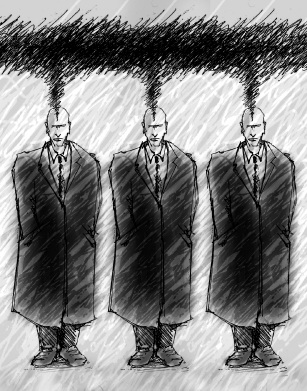
Technology fools us into believing that time and space no longer matter, that we have somehow overcome such barriers to know each other better than we ever have before. Every weekend during football season, I was subjected to a nonstop battery of “tech porn” advertisements seducing me into accepting that life would be more enjoyable if only I would purchase a nonstop array of glittering, new electronic devices. The implicit promise underlying said technology is that one day our lives will finally achieve perfect bliss when we upload our souls into the cloud. Um, no thanks, Mr. Man in Gray.
Illustration from Michael Ende’s “Momo”
These ads remind me of how home appliances were once touted as “time-saving” devices that would allow us to enrich our lives with more intimate, “quality” interactions with the ones we love. We all know how that turned out. It seems like, more and more, we have to unplug ourselves from the grid and toss away those clever gadgets in order to recover our collective sanity.
No matter how many iPods, iPhones or iPads you might own (personally, I’m an Android guy), you have probably discovered that there’s no real way to avoid the epistemological problem hardwired into the human experience. (If you don’t know what epistemology is, you probably weren’t around to read Othello with this blog. Go look it up. I’ll wait.)
I mentioned then my surprise discovering Shakespeare’s implicit awareness of this philosophical conundrum in Colin McGinn’s fabulous book titled “Shakespeare’s Philosophy.” I’ll badly summarize it here by saying that epistemology is the philosophical enquiry into how humans know what we know – and indeed, whether we can know anything with any certainty whatsoever.
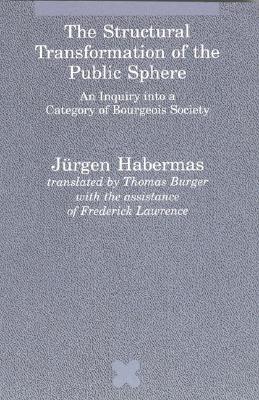
Back when I was in college at UCLA working on a German degree, I was required to read (or attempt to read – it’s extremely difficult) a groundbreaking work by the renowned scholar Jurgen Habermas called “The Structural Transformation of the Public Sphere,” a discourse on how our ideas defining (and separating) exterior, public space from private, interior space evolved. You’ve probably never thought of public space as a learned concept, but I think about it all the time now whenever I see somebody chatting on their cell phone on a bus or in the grocery checkout line or during a concert or while conducting a transaction with a bank teller.
What McGinn has done for me is to awaken a sensibility regarding personal and private space within Shakespeare, to understand that not only his tragedies but his comedies are informed by epistemological concerns. In short, that there always seems to be a discrepancy in shared information, leading to confusion or worse. In the tragedies, truth can be manipulated to ruthless ends. In the comedies, ironic levels of misunderstanding evoke laughter. But in both cases, ignorance of what’s actually happening lies embedded at the core.
I would love to carve out a span of time to go back and re-read Habermas with an eye on Shakespeare. The issues at stake in the Comedy of Errors hardly require such heavy lifting, but over the long haul this year I am fascinated by whether Shakespeare was unique in his preoccupation with epistemology or whether it was inherent in the age. Perhaps society as a whole was only coming to grips with the implications of interior and exterior forms of knowledge, grappling with how discrepancies might be exploited or manipulated. Machiavelli was a Renaissance thinker who advocated such awareness and usage by a ruler who wished to stay in power. But deception itself is as old as human self-awareness.
In my next post, I will harken back to Act II in order to write about Shakespeare’s women.
The Comedy of Errors was probably the first play written by Shakespeare. While the chronology of his repertoire is far from definitive, scholars have more or less established a working sequence, with the Comedy of Errors heading the pack.
It’s a farcical tale of mistaken identity whose underlying premise reminds me a lot of this classic routine from Abbott and Costello:
In order for a story like this to work, you have to go into it like you would a campy Michael Bay movie – with a big bucket of popcorn, willing to suspend your disbelief. Accept in advance that the premise will be sketchy and roll with it. Tom Cruise flicks have required less.
In this case, prepare to swallow the whopper that identical twin sons were born on the same day as their identical twin servants. One day, a shipwreck separates the parents along with one son and a servant each. Unable to reunite, they spend many lonely years apart.
Fast forward to the present, where both sons, along with their servants, a wife, her sister, and the parents unknowingly end up in the same city together. Suffice it to say that hilarity ensues…if you are the sort that goes in for that kind of thing.
Me? I’m a Monty Python fan who used to love the screwball humor of Peter Sellers, Dudley Moore and Dom Deluise (R.I.P.). Good comedies are harder to come by than competent dramas and tragedies these days, so it’s not like I’m rooting against this kerfuffle. It’s just that the schtick tends to wear out its welcome fairly quick. More like Benny Hill or an overly long Saturday Night Live sketch than Murder by Death, Arthur or The End.
I’m told that the staged versions of these mistaken-identity farces come off better than the plays read alone. I’ll grant that I have yet to witness an early specimen presented live, as it was meant to be experienced. So I will reserve judgment until then.
Did I mention how happy I am to be free of tragedy and history?
When I was in high school, one of my English teachers did an amazing thing. After we finished Richard III, she had us read Josephine Tey’s “The Daughter of Time,” a modern mystery novel about you-know-who. Years later, I still remember being blown away by the case Tey made for Richard’s innocence, but for the life of me I could not recall her argument or why its effects had lingered.
So it only seemed appropriate that I revisit the novel after completing the play in my year of Shakespeare. I wanted to know whether I would be moved again by the book, and if maybe now I could grab hold of it and retain more now that I had a better grasp of Shakespeare. Wherever you are, Mrs. James, thank you. Let that be a lesson for other teachers who wonder whether they are making an impact on students’ lives!
I set aside a bit of time after finishing the play to re-read the novel and watch a documentary by Al Pacino called “Looking for Richard,” hoping they would shed more light on the mysteries Karla Tipton elucidated in a recent guest blog. I wanted to gather my own thoughts and weigh them against the story that Shakespeare presents. But I also had to ask myself how much historical veracity mattered. Does theater need to be accurate? Where should I draw the line when making aesthetic judgments? Tey wrote historic fiction – but was she telling the whole truth? Was Shakespeare aware that the story he told was perhaps riddled with lies?
Right off the bat, Looking for Richard proved no help whatsoever. It might have been called, “Looking at Al Pacino Looking for Richard” since it basically amounted to a visual diary of Mr. Pacino seeking the best way to film the play, not investigate the truth behind it. I love Al Pacino. I found the film entertaining, if perhaps a little depressing since the “man on the street” interviews only confirmed the idea that most people know nothing substantial about the historical Richard and what they assumed turned out to be either cliché, trivial or flat-out wrong. Mr. Pacino, while attempting to render the play in the most dramatic manner possible, sought merely to reinforce the bias inherent in the text. If those are lies, then the actual truth just gets more deeply distorted and ultimately engulfed by the prevailing dogma.
Josephine Tay (real name: Elizabeth Mackintosh) sets everything we presume to know about Richard on its head. If I found her argument compelling way back in high school, it became all the more riveting now. I doubt I’ll forget the gist of it this time, since I subscribe to the argument that Richard was innocent and slandered by the powers that shouldn’t have been – namely, the Tudors, who had zero claim to the throne.
I have stated before that I do not wish for this blog to become a book report. So instead of recounting her entire argument, I will share what were for me her two most salient and convincing points:
1) Richard ascended to power legitimately via a document called Titulus Regius (“royal title” in Latin) which Wikipedia describes as: a statute of the Parliament of England, issued in 1484, by which the title of King of England was given to Richard III.
It is an official declaration that describes why the Parliament had found, the year before, that the marriage of Edward IV of England to Elizabeth Woodville had been invalid, and consequently their children, including Edward, Richard and Elizabeth, were illegitimate and, therefore, debarred from the throne. Thus Richard III was proclaimed the rightful king.
With this document in hand and having secured rule lawfully by declaration of Parliament, Richard had no reason to kill his nephews. None. Doing so would only have made him look bad at a time when England – aside from the Woodvilles and Lancastrians – embraced him as the new king.
2) Richmond/Henry VII had all the reason in the world to want the nephews dead. Why? Because in his desire to marry an empowered Elizabeth, he had the Titulus Regius revoked unread and expunged from the record. But by doing so, he inadvertently restored the two nephews who were far more entitled to the throne than Henry! The only way he could have it both ways was to disappear the two kids and blame it convincingly on Richard.
I have condensed and highlighted what for me are the most powerful arguments. But there are others, including the dire fates of the the York children under Henry, how the murder “confession” came about twenty years too late and how the subsequent slanted history was written by Tudor loyalists and sycophants.
It’s here that Tey’s reasoning grows gargantuan and viral, gobbling more than just Richard III, Henry VII, Thomas More and Shakespeare. For once her argument is absorbed and assimilated, we find ourselves like the lead character, Grant, proclaiming that we’ll never trust our history books again.
Winners write history. Most of what we accept as fact comes with an implicit agenda. When we’re finished questioning Richard, we start to wonder about other myths that may have been handed down to us: George Washington and the cherry tree, Honest Abe, the League of Nations, the creation of the Federal Reserve, the Bay of Pigs, the assassinations of JFK, MLK, Bobby and Malcom X. Where does it end? How much of what we have been told can we — and should we — believe?




 A Year of Shakespeare