Archive for the Asides Category

Lady Shakespeare

Posted in Asides with tags , , on 2010/02/14 by mattermind

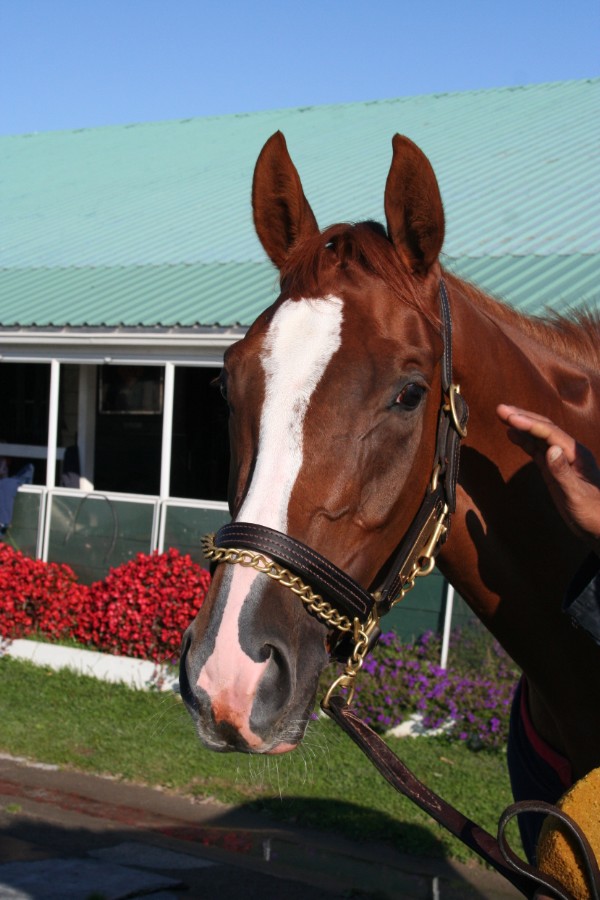
Here she is. Ain’t she a beauty?

Fair warning to the boys though: she moves fast and she’s got great legs, but good luck trying to catch her!

After the greatest year for fillies in the history of horse racing in 2009 (congratulations to both Rachel Alexandra and Zenyatta, the only two candidates worthy of the Horse of the Year title; no stallion could rival them) it’s now an established fact throughout the Western world that anything is possible for females.  So watch out. Danica’s not the only one in your rearview mirror.

Talk about smashing gender barriers. Go, girl, go!

Those ETrade Babies Strike Again

Posted in Asides, YouTube on 2010/02/07 by mattermind

Flat out clever… and funny.

2020: a Breakout Year for Brett Favre?

Posted in Asides, YouTube with tags on 2010/02/07 by mattermind

Brett Favre has a second career waiting for him… should he never retire.

Parisian Love

Posted in Asides, YouTube with tags , , , , on 2010/02/07 by mattermind

It was by far my favorite ad during the Super Bowl this year. As it turns out (and it figures) Google has been running it for quite awhile on YouTube.

But I certainly hadn’t seen it before. To show you what a sap I am, I utterly adored it. Telling a story through a series of Google queries seemed not only heartfelt and witty in comparison to all the lame beer commercials and jock humor, but also the most thematically spot on: search after all is what Google is about.

Houses made out of Bud Lite, coffins filled with Doritos? I didn’t just dislike those — I hated them. Ick.

Here is the Google ad, in case you missed it. Enjoy!

Test for Echo

Posted in Asides with tags , , , , , , , on 2010/02/06 by mattermind

Today’s letter of the day is “D” for disillusionment — for at the heart of the matter, I believe Timon from Athens to be a battered and heartbroken soul.

In asking myself about what I think is the story center, I keep returning to misanthropy and its principle causes. Do we just get jaded at some point and never recover our innocence? What is the nature of humankind? Do we presume Original Sin? Or subscribe to Rousseau’s noble savage? Is man born good and corrupted by society — or does society redeem man from his evolutionary heritage red in tooth and claw?

My base setting happens to be spiritual, hopeful and idealistic to a fault. Despite what I read and hear and see and experience about the world and its limitations, inequalities, sorrows and injustices, I have a fundamental, underlying sense that there is an order pervading it all, a purpose transcending reason and bridging the gap between our literal existence and a meaning we can’t quite put our finger on. I’m a believer.

But at the same time, I recognize agnosticism and atheism as all-too-viable options, especially in response to the daily input we receive from our surrounding environment: the earthquake in Haiti, children dying of malnutrition and AIDS. Perpetual vice, corruption, ignorance, poverty. The cycles of death, disease and decadence that led Buddha to his epiphany about desire at the root of human unhappiness. (It’s not for no reason that D champions the day.) Time passes, yet nothing changes.

What could God be waiting for before pulling the plug on this sea-monkey experiment? Have we improved by one jot?

I feel for Timon and the error in his base assumption: if I do good out of kindness, then life will provide for me. I needn’t concern myself with self-protection and the niggling financial details. Beneficence leads to bounty. Even if I’m not Warren Buffett or Bill Gates. The internal mechanism is just. I have been given much so that I, in turn, may give it all away.

It’s hard not to read the opening act of Timon and think, what a dupe. He’s either guileless or boneheaded or a fraud himself — doesn’t he see that these people are users? Can’t he distinguish between the good and the preening posers pretending to be so? (So, okay, and the letter “P.”)

Neither interpretation skirts the hard truth that the people surrounding Timon are vultures. Shakespeare makes this abundantly clear, both in the before and after images of the Poet and Painter and the Senators who say what they need to in order to get what they want. They are all whores in one way or another.

Timon’s gripe, however, extends outward to all of us. The nature of experience itself is nasty, brutish and short, to borrow words from Hobbes. The moon uses the sun. Eat or be eaten. You can’t escape the primitive war for survival; you can only be ignorant of it or try and close your eyes to it. But all our institutions are illusions, adult games of make believe to convince us we’re something we’re not.

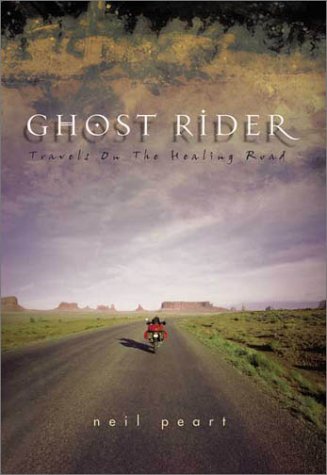
I’m currently reading Ghost Rider by Neil Peart, the drummer and lyricist for Rush (among his many notable accomplishments). I was particularly drawn to it because of the context in which he wrote it: having lost his daughter Selena to a car accident and his wife Jackie from the devastating heartbreak of the loss — and all within a year’s time — he set off on a journey by motorcycle with no stated direction or purpose other than to keep his “baby soul” alive.

He’s been one of my heroes since high school, the older brother I never had. Though our principle orientations toward the world differ radically, his rational-scientific-skepticism has served as thorny counterpoint (occasionally in 6/8 time) to my tiggerish optimism and belief. No matter how much I might oppose his conclusions, I never fail to gain lots from the Hegelian dialectic, wrestling out on the lawn in the metaphorical backyard. At the end of the day, he is living a life I deeply admire: one of awareness and accountability, of adventure and constant appreciation for the briefness of our flourishing in this time and space (as the As drop by for their say).

The travelogue by motorcycle has been a nice bonus. But the core question at the heart of the heart of the matter has been nagging me, the one that caused me to start reading in the first place: would he find Spirit at some point in the journey? Would the Sophoclean blow delivered like a Greek tragedy finally bring hm to his knees? Would he, like Aquinas, experience a profound religious epiphany in the cathedral that caused him to disavow his previous writings “as straw?”

Reading along, I was struck by this quote:

Everything I ever believed has been blown out of the water, even my simple karmic morality of “you do good and you get good.” Sadly (very sadly) ‘taint so.

But I was equally struck by another, prior quote:

You know, I used to think that, “Life is great but people suck,” but now I’ve had to learn the opposite, “Life sucks, but people are great.”

How to process this in terms of Timon?

One of the major lessons in cognitive therapy is that the map is not the territory. What we think we know about life does not necessarily correspond with how life actually is.  Parents imbue us with a sense of the accepted boundaries, the geography, topography and horizons of our youth that they envision will stead us for the course.  But e’re long on our outward journeys, we discover we’re not in Kansas anymore.

It normally entails neither a radical course correction nor a complete makeover; we’re driving a car and  counter steering as we go along, constantly fine-tuning our belief systems to stay medium on the road, updating and integrating our lived experience into our philosophical works-in-progress (plus or minus the mediated events that wreak havoc on our outlooks.  God forbid we should have to live through the devastation of a Haiti or a New Orleans or a 9/11. But people do. And without necessarily abandoning their faith in an order and meaning to the universe.)

Maybe the take-home from Timon is that he could not ultimately distinguish between the map and the territory. When he lost one, he lost both. Unable to refashion the old pattern from the shards of shattered meaning, he failed as well to create a new, functional worldview. For him, it was either all or nothing at all.

I admire Neil Peart greatly for not compromising his values, for absorbing and integrating the bodyblows of lived experienced and travelin’ on. Not only surviving, but thriving, rising like the Phoenix to bring a new dream into existence.

Life goes on, and we all do the best we can. Hopefully, in the midst of it, we continue to gather in warm, well-lighted places to share and reflect from our individual experiences, to collectively gain from our localized views as dots on a spherical map.

Perhaps, one day, Google Earth will become our GPS of choice, a technological interface for digital men and women, yet one step closer to the heart.
Anachronisms [Gesundheit]

Posted in Asides with tags , , , on 2010/02/02 by mattermind

No, it doesn’t mean fear of spiders, silly. Or zealous appreciation of wine.

From the handy Encarta Encyclopedia Dictionary:

a·nach·ro·nism [ə nákrə nìzzəm]

(plural a·nach·ro·nisms)

noun
1. chronological mistake: something from a different period of time, for example, a modern idea or invention wrongly placed in a historical setting in fiction or drama
2. something out of time: a person, thing, idea, or custom that seems to belong to a different time in history
3. making of chronological mistake: the representation of somebody or something out of chronological order or in the wrong historical setting

[Mid-17th century. Via French anachronisme from, ultimately, late Greek anakhronizesthai , literally “to be timed backward,” from khronos “time.”] –a·nach·ro·nous [ə nákrənəss], adjective –a·nach·ro·nous·ly, adverb

Microsoft® Encarta® Reference Library 2005. © 1993-2004 Microsoft Corporation. All rights reserved.

I chose to read Timon before Pericles, based on the ordering in Isaac Asimov’s Guide to Shakespeare. As I contend with revel in five historical plays in a row, it behooves me at some point (a hooved horse that I am), to point out some of the glaring historical inaccuracies in Shakespeare’s plays. Hilarity ensues, trust me.

Well, not hilarity exactly. Because this is Shakespeare, nobody cares much about geographical errors (though Ben Johnson once laughed mightily at Bohemia’s coastal setting for The Winter’s Tale).

I admit I screwed up in my assumption (yep, made another ass out of me), that Pericles would be about the great Greek leader during the glory days of Athens. He of the wondrous funeral oration that has been praised ever since.

Nope. Timon is the only play Shakespeare set during the Greek heyday, and it mentions one noteworthy figure from that era: Alcibiades, a guy who shows up in a Socratic dialogue or two.

Goof that I am, I was hoping for a little Godzilla vs. Rodin mixed martial arts fighting, crosswiring my love of Shakespeare with my love of Plato. Instead, I have a so-called Greek play on my hands which treats Athens like Rome, filled with Senators and other folks with very un-Greeky names like Lucius, Sempronius, Flavius, Servilius, Titus — and on and on and on.

Where’s Yani when you need him?

Clearly a lot more people would care about the jarring discrepancies if, you know, this wasn’t Shakespeare. It makes me wonder what the scene was like (okay, pardon that) back in the day when the play came out. Did nobody dare bring up the snags here or there with the Bard? Was it no big deal, as it is now, just having a little fun? As smart as we know Shakespeare to be (or not to be), how could he overlook these huge screw ups in local culture?

Then again, as a friend is wont to say, “Nobody asks these questions.” It’s like me getting snarky when I hear Romantic piano sonatas being played by Cesario (and others) in the filmed version of Twelfth Night (see below). I didn’t want to mention it then because I had a feeling it would come up again. And it did. And it didn’t take too long at that. Hmm.

I suppose chronological accuracy matters less and less the more post-modern we become. Names, dates, places and faces become mashed up in a way only the offkilter genius of Andy Warhol could have predicted.

Every other day we hear stories about high school students who can’t find France on the map (and Congressmen who raise a cheer, pass the Freedom Fries). The Civil War (they fought nicely), the Magna Carta (doesn’t accept Visa), the Knights of the Round Table (pepperoni preferred) — history becomes trivia; trivia history. And all subject to bad time-travel movies where cavemen confront dinosaurs and whatnot.

I guess I’m confessing to yet another assumption about Shakespeare I got wrong. Just like our movie industry, the one that never gets the book adaptation quite right, Shakespeare was an entertainer concerned with creating popular entertainment with a big box-office draw.

He wasn’t fussy for historical accuracy. What he wanted was to get the human condition part nailed down to the T, to be a mirror to nature, to capture people with all their warts, hardons, guilt-trips, jealousies and greed.

I keep presuming that what I’m reading in Shakespeare is the way it had to go down. But no — that’s not it, is it? As in Richard III, which we’ll discuss later, the point is not the journalistic facts, the who-what-why-when-where, but the hows: how we were, how we are, and how we will forever be.

Flavius in Ancient Greece? I don’t think so. But Timon in modern America? All the time.

And that, I think, is what makes Shakespeare so timeless and universal. He may get a lot of the specific details all wrong. But he never fails to get the human condition just right.

Exploring the Dark Side

Posted in Asides with tags , , , , on 2010/01/29 by mattermind

I have a suspicion that there’s a lot of restless turmoil churning beneath the American psyche since 9/11 — rage, sadness, hurt and confusion that hasn’t been addressed yet in our art and public discourse.

I’ve read up a bit on trauma and what it does to its victims. Too often, the symptoms are overlooked or placated with a hardy John Wayne-ish “Buck up, Pilgrim” approach that leaves the bereft and grieving to feel all alone in their internal shock and sadness.

Only now are our movies — the only universal art form that we have — beginning to explore the deep hurt, fear and anger roiling in our collective unconsciousness. It’s coming out in odd, curious, depressing showdowy and apocolyptic ways that truly terrify me.

I may be alone in this, but I suspect that many of us are still searching for answers to relieve the pain and betrayal we feel inside us. And we’re tired of the schmaltz and pablum that we’re offered as consolation from the media. It’s either “Don’t think about that” or “Let’s go blow us some cool shit up.” Or: “The bogey monsters are coming to get you.” And: “Lo, the end of the world is neigh.”

If it’s the end of the world as we know it, I don’t feel fine, REM. And sorry, Prince, but I can only vaguelly recall how it was partying like it’s 1999. Before it all changed only two short years later.

We have serious work to do as a nation, as a society, as a culture, as a people if we are to drain the hurt from our hearts and rebuild our national strength, our brightness, our warmth, our trust, and our faith in a better future for all of us.

I don’t think movies like this will help:

Revenge Fantasy: Gibson vs. Goons
By Michael O’Sullivan
Friday, Jan. 29, 2010

There’s nothing especially edgy or dark, or darkly edgy, or even particularly twilit about “Edge of Darkness,” at least as thrillers go. Its title is one of those generic labels, like “Compelling Evidence” or “Deadly Affair,” that only hint at what’s inside, without telling you the exact flavor or nutritional content.

Here’s what you’ll find: an elaborate — and not entirely unsatisfying — revenge fantasy about a cop who sets out to find his daughter’s killer after she’s gunned down in front of him on his front porch.

MORE: http://www.washingtonpost.com/gog/movies/edge-of-darkness,1133927/critic-review.html

R.I.P.J.D.

Posted in Asides with tags , , , , on 2010/01/28 by mattermind

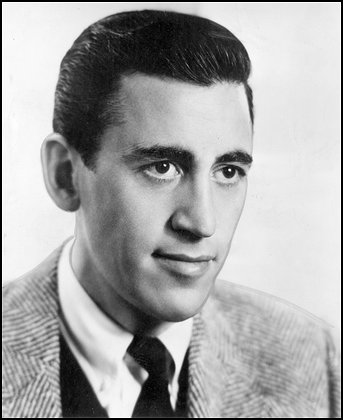
Fly the flags at half staff. Burn precious incense. Loose the corks from bottles of vintage wine. Lift a toast. Drink deep. Stare long and quietly at the stars tonight. For another beloved genius has vanished from the earthly realm to enter into the immortal pantheon.

Goodbye, J.D. Salinger.

You will be sorely missed, and surely never forgotten.

Blogged Down

Posted in Asides with tags , , on 2010/01/26 by mattermind

With rain due to return to “sunny” Southern California, I though I’d use this opportunity to give props to a witty — and surprisingly snarky — fellow blogger.

You may know this fellow… or think you do. But trust me, kids, he’s a LOT funnier than you ever realized. (I think maybe he’s been hanging around the animals too long.)

Off subject again, I know. But soooooo worth it!

http://www.wittenburgdoor.com/noahs-blog

Baseball vs. Football

Posted in Asides with tags , , on 2010/01/25 by mattermind

Here it is. Great stuff!